
For OEM factory production
Refrigerant charging systems for data-center cooling OEMs
Airserco helps manufacturers of refrigerant-bearing chillers, precision DX and CRAC units, and packaged cooling equipment plan, configure, install, and commission factory charging systems for A2L and other refrigerants.
Moving to an A2L or other flammable refrigerant affects more than the charging machine. Bring manufacturing, facilities, EHS, quality, and controls together before the product and plant plans are locked.
Early estimates are completely fine. Start with your equipment, refrigerant options, charge range, production target, plant, and timing. Prefer a quick call? 1 (800) 218-1537.
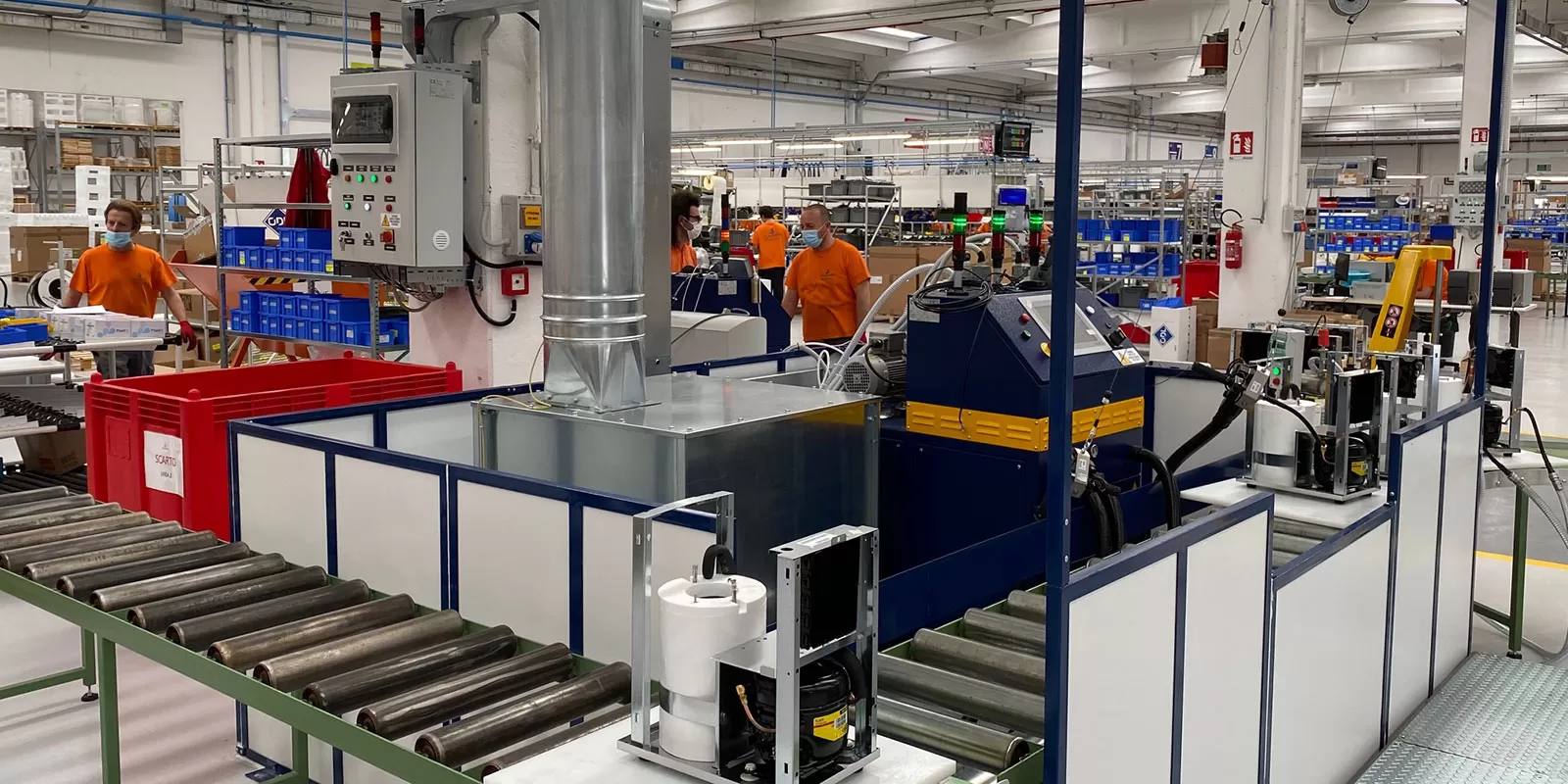
The right target
Built for the equipment manufacturer, not the data-center operator
Airserco equips the factory process used to evacuate, charge, test, and document refrigerant-bearing cooling equipment.
If you are buying cooling equipment for an operating data center, the cooling-equipment OEM is usually your first call.
Precision DX and CRAC equipment
Production charging for direct-expansion cooling units manufactured for data centers, server rooms, and other critical environments.
Refrigerant-bearing data-center chillers
Factory charging systems for purpose-built chillers that contain a refrigerant circuit.
Packaged and modular cooling systems
Charging processes for self-contained products that receive refrigerant before leaving the factory.
New lines and production expansions
Pilot cells, new factories, refrigerant conversions, capacity increases, and modernization of existing charging processes.
Liquid-only cold plates, CRAHs, or CDUs
Products that never receive refrigerant at the factory usually do not require a refrigerant charging cell.
We qualify fit early. If your product does not need a refrigerant process, we will say so before anyone burns time on a sales cycle.
Conceptual process flow
One coordinated charging-cell scope
The right architecture begins with the product and production target, not a catalog model. Select a stage to see the questions it should answer.
Refrigerant selected or under consideration, supply container, usage rate, and plant constraints.
Supply architecture, transfer requirements, conditioning, connections, and inventory interfaces.
How refrigerant reaches the station consistently and safely at the required production rate.
Product mix, refrigerant properties, required flow, distance, and changeover expectations.
Transfer equipment, hose and connection selection, process sequencing, and contamination-control planning.
How to maintain a stable process across products, shifts, and expected changes.
Circuit volume, moisture target, connection strategy, cycle-time goal, and test requirements.
Evacuation process, vacuum equipment, connection tooling, test coordination, and pass/fail logic.
How to reach the required process condition without making evacuation the line bottleneck.
Minimum and maximum charge, tolerance, product temperature, takt time, and SKU range.
Metering, charging sequence, charge verification, recipes, product connections, and appropriate recovery functions.
How to achieve repeatable charge results at the required production rate.
Refrigerant classification and quantity, plant layout, utilities, facility design, and local review requirements.
Equipment safety functions plus interfaces for detection, ventilation, emergency stops, interlocks, access, and electrical review.
Which responsibilities belong to the equipment, facility, integrators, customer professionals, and local authority.
Serial-number workflow, recipe control, records required, pass/fail handling, and factory-system interfaces.
Operator prompts, barcode inputs, process values, charge records, result signals, and included integrations.
What must be recorded for quality, troubleshooting, audit needs, and future process improvement.
Exact scope depends on the refrigerant, product, facility, production requirements, and customer responsibilities.
Production inputs
Designed around the line you need to run
A station can meter refrigerant accurately and still be the wrong production system. The useful questions connect equipment performance to throughput, product mix, operator work, factory systems, and planned growth.
Bring your current estimates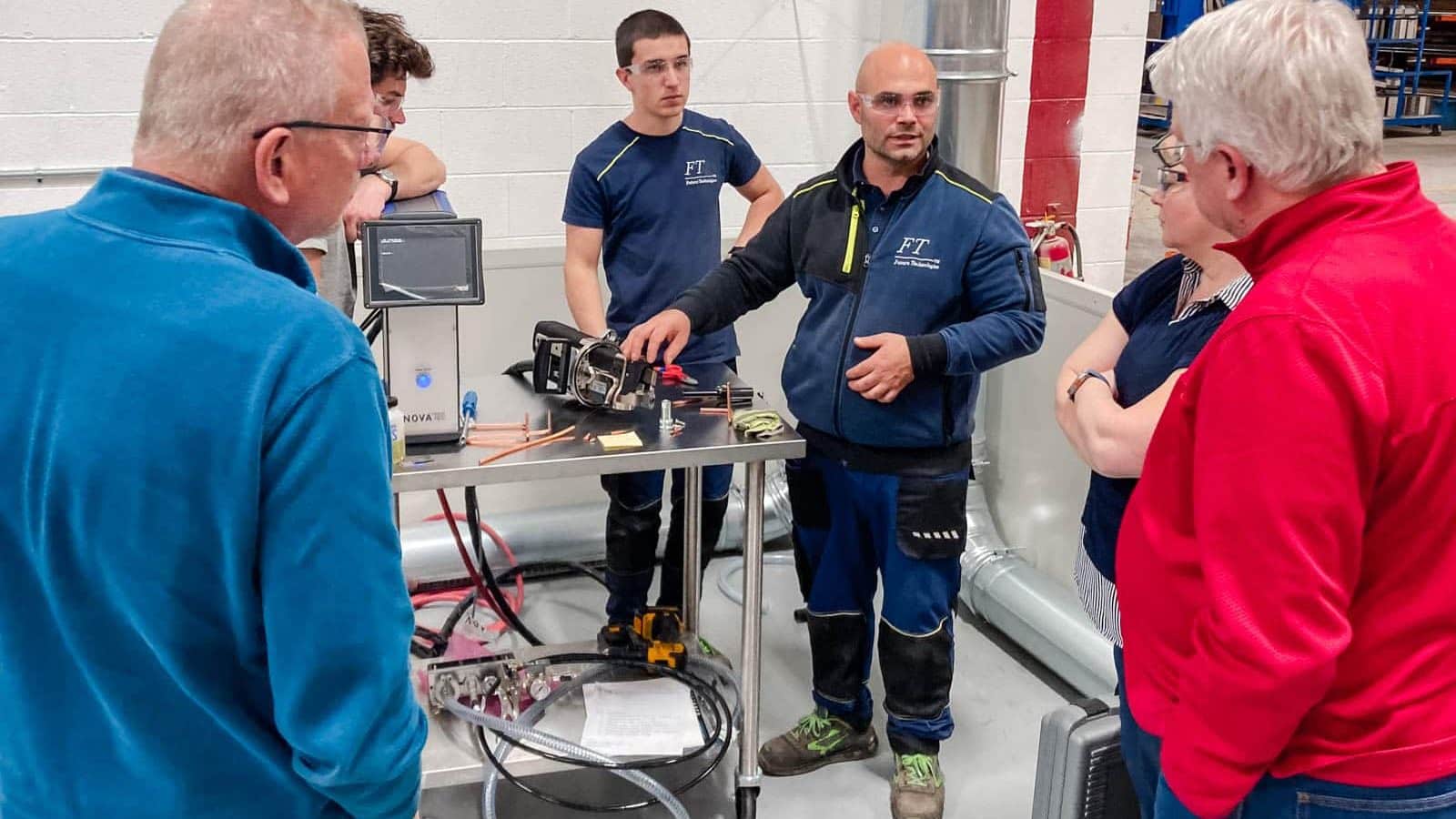
A production partner
The equipment is only one part of the launch
Airserco works with OEM teams from early process planning through equipment delivery, installation, startup, commissioning, and training, as included in the project scope.
- Manufacturing and process planning
- Facilities, EHS, and integration coordination
- Operator and maintenance training
- Documentation, spares, and service planning
“Their training was not cut short and they showed us a few ways to use the machine that help with our custom application.”
Verified customer review published on Airserco.com
Factory evidence
Physical systems for physical production lines
Real equipment, real interfaces, and real factory coordination. Every configuration is developed around the customer’s product and plant.

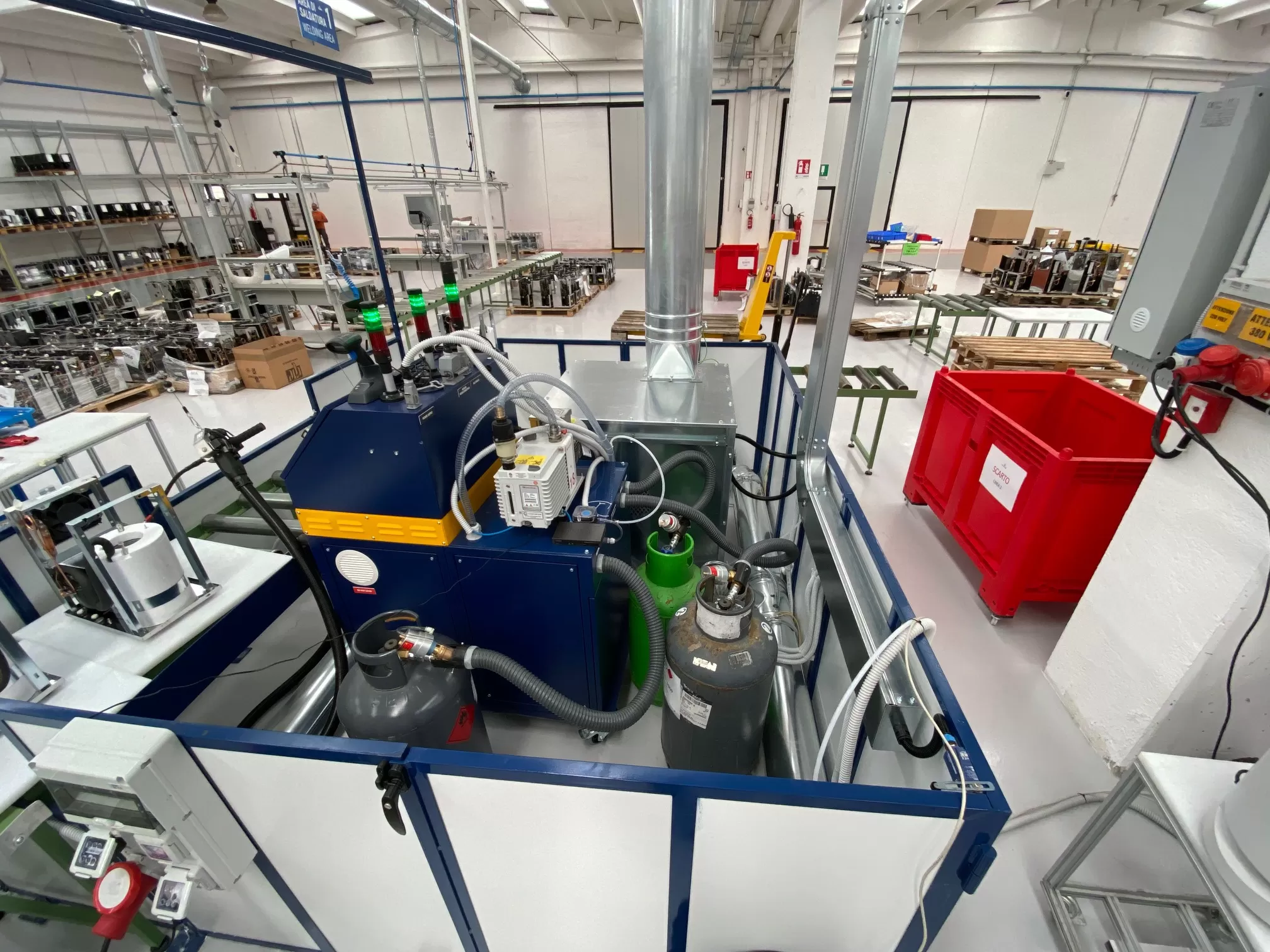

Planning a new line, conversion, or capacity expansion? Early product and plant estimates are enough to begin.
Request a readiness reviewProject sequence
Bring Airserco in before the line is locked
Early conversations are often the most useful. You do not need every answer before the first review.
-
01
Factory readiness review
Start with the equipment, refrigerant options, charge range, volume, plant, target date, and decisions already made.
-
02
Preliminary system direction
Identify the likely architecture, major building blocks, facility interfaces, open questions, and information still needed.
-
03
Detailed scope and coordination
Define equipment, layout, controls, utilities, responsibilities, production records, and integration requirements.
-
04
Build, install, commission, and train
Deliver the included equipment and services with a clear startup, training, documentation, and support plan.
Regulatory context
Plan for the production line, not just the refrigerant deadline
EPA's current Technology Transitions tables set a 700 GWP limit for the covered subsector “Data centers, computer room air conditioning, and information technology equipment cooling.” For covered products, the manufacture and import compliance date is January 1, 2027. For covered field-assembled systems, the installation compliance date is January 1, 2027.
That threshold does not mandate one refrigerant or define a complete factory design. The selected refrigerant, approved use conditions, applicable codes and standards, facility design, quantities, and local review can all affect the project. Canadian projects require a province-specific review.
Airserco can configure equipment and help document production and facility interfaces in support of a customer’s compliance plan. Final code, safety, and compliance determinations remain with the customer’s qualified professionals and the applicable authority having jurisdiction. The EPA tables are informational; refer to 40 CFR Part 84, Subpart B for complete requirements.
Source review July 22, 2026 Regulatory reference Current EPA sector table
Engineering questions
Useful answers before a specification exists
If your refrigerant, charge weight, or line architecture is still moving, that is a good reason to talk early.
Does moving to an A2L refrigerant require an entirely new charging line?
Not always. The answer depends on the existing equipment, refrigerant, charge range, production target, controls, facility plan, and applicable safety requirements. A readiness review can help identify what may be reusable, what may need modification, and where a new system is likely.
Can one system support multiple products or refrigerants?
Sometimes. Product recipes, metering range, connection tooling, material compatibility, contamination control, changeover procedures, and safety requirements all affect the answer. The system should be configured around the actual products and refrigerants.
How early should Airserco be involved?
Ideally, while product design and factory planning are still being defined. Charge range, throughput, product mix, line layout, controls, and facility interfaces are easier to address before equipment and construction plans are finalized.
Does Airserco support Canadian projects?
Airserco supports projects in the United States and eastern Canada. Canadian work requires review of the applicable federal, provincial, and local requirements for the facility and refrigerant involved.
What if the refrigerant or final charge weight is not selected?
Share the options being considered, expected charge range, product category, and production target. Airserco can identify which decisions affect the charging-system architecture now and which can remain open longer.
Start the conversation
Request a factory readiness review
Tell us what you are planning to manufacture. Rough estimates and early-stage projects are welcome.
The review is intended to clarify:
- Whether the project is a fit
- Likely charging-system building blocks
- Important factory and facility interfaces
- Missing information or early project risks
- The most useful next step toward a defined scope
Tell us about your project
Rough estimates are completely fine. Share what you know now and we can help identify the decisions that matter next.